• Did you know CO₂ is an essential component to all life on earth?

    Algae, photosynthetic bacteria, and plants convert water and CO₂ to carbohydrates and oxygen when sunlight is present. When there is no sunlight, non-photosynthetic organisms combine the oxygen and carbohydrates back to form CO₂, water, and energy. Imbalances occur during these processes when carbon compounds are removed from the carbon cycle for a very long time (millions of years). This imbalance also creates free molecular oxygen in the atmosphere.

    CO₂ present in the atmosphere easily dissolves in water and forms carbonic acid, which acidifies the water. The carbonic acid dissociates when the pH of the water reaches between 6.3-10.3 to form carbonate or bicarbonate compounds. The presence of cations such as calcium will then form carbonate or bicarbonate salts. Some of these salts form insoluble solids known as limestone. Heating limestone to approximately 1600ᵒF will form lime and release CO₂ as a byproduct. This is the common process to create cement. Combusting carbon-containing materials such as fossil fuels is another important reaction that also releases CO₂. For example, when methane and oxygen are combined, the product is CO₂, water, and heat. Most of the industries that release CO₂ emissions are simply reintroducing carbon compounds that were removed from the carbon cycle millions of years before.

    Author: Mohamed Hersi, Licensed Environmental Engineer (P.E.)

  • Geologic AI: Revolutionizing Resource Development in Mining

    Geologic AI is transforming the mining industry by integrating advanced artificial intelligence and sensor technologies to revolutionize mineral exploration and resource development.

    Here’s how their approach is advancing mining:

    • Real-Time Drill Core Analysis: Geologic AI’s platform combines a range of sensors—including hyperspectral imaging, X-ray fluorescence (XRF), 3D imaging, and laser-induced breakdown spectroscopy—with sophisticated machine learning algorithms. This fusion enables the real-time scanning and high-resolution analysis of drill core samples, delivering immediate mineral identification and lithology interpretation far surpassing traditional lab techniques in speed and precision.
    • Accelerating Discovery and Improving Sustainability: By instantly processing geological data, Geologic AI reduces the time, cost, and guesswork typical of mineral exploration. Geologists and investors gain actionable insights faster, which leads to fewer unnecessary drill holes, reduced environmental impact, and smarter resource modeling decisions.
    • Global Impact and Industry Adoption: Geologic AI’s solutions are already in operation across projects on five continents. Their technology is supporting mining giants such as BHP and Rio Tinto in accelerating critical minerals discovery, especially those essential for clean energy and electrification, like lithium, copper, and rare earth elements.

    Recent Funding:

    In July 2025, Geologic AI secured $44 million in Series B funding, led by Blue Earth Capital and joined by BHP Ventures, Rio Tinto, and Breakthrough Energy. This strategic investment will fuel the global expansion of their AI-driven platform, further development of proprietary technologies, and deepening of their footprint in key mining jurisdictions. This funding signals industry confidence in Geologic AI’s ability to address the sector’s urgent needs, expediting mineral discovery, enhancing efficiency, and strengthening.

    Author: Mohamed Hersi, Licensed Environmental Engineer (P.E.)

  • How Carbon Dioxide Fuels Life and Industry

    Did you know Carbon Dioxide (CO₂) is an essential component to all life on earth?

    Algae, photosynthetic bacteria, and plants convert water and CO₂ to carbohydrates and oxygen when sunlight is present. When there is no sunlight, non-photosynthetic organisms combine the oxygen and carbohydrates back to form CO₂, water, and energy. Imbalances occur during these processes when carbon compounds are removed from the carbon cycle for a very long time (millions of years). This imbalance also creates free molecular oxygen in the atmosphere.

    CO₂ present in the atmosphere easily dissolves in water and forms carbonic acid, which acidifies the water. The carbonic acid dissociates when the pH of the water reaches between 6.3-10.3 to form carbonate or bicarbonate compounds. The presence of cations such as calcium will then form carbonate or bicarbonate salts. Some of these salts form insoluble solids known as limestone. Heating limestone to approximately 1600ᵒF will form lime and release CO₂ as a byproduct. This is the common process to create cement. Combusting carbon-containing materials such as fossil fuels is another important reaction that also releases CO₂. For example, when methane and oxygen are combined, the product is CO₂, water, and heat. Most of the industries that release CO₂ emissions are simply reintroducing carbon compounds that were removed from the carbon cycle millions of years before.

    Author: Mohamed Hersi, Licensed Environmental Engineer (P.E.)

  • AI in Africa to Address Environmental Challenges

    AI is increasingly being recognized as a powerful tool in addressing environmental challenges in Africa. From predicting weather patterns to monitoring wildlife and optimizing energy usage, AI is transforming the way people understand and interact with the environment. One of the most pressing environmental issues in Africa is the changing climate. AI can help mitigate its effects by providing accurate predictions and simulations. Several companies are embarking in this journey already.

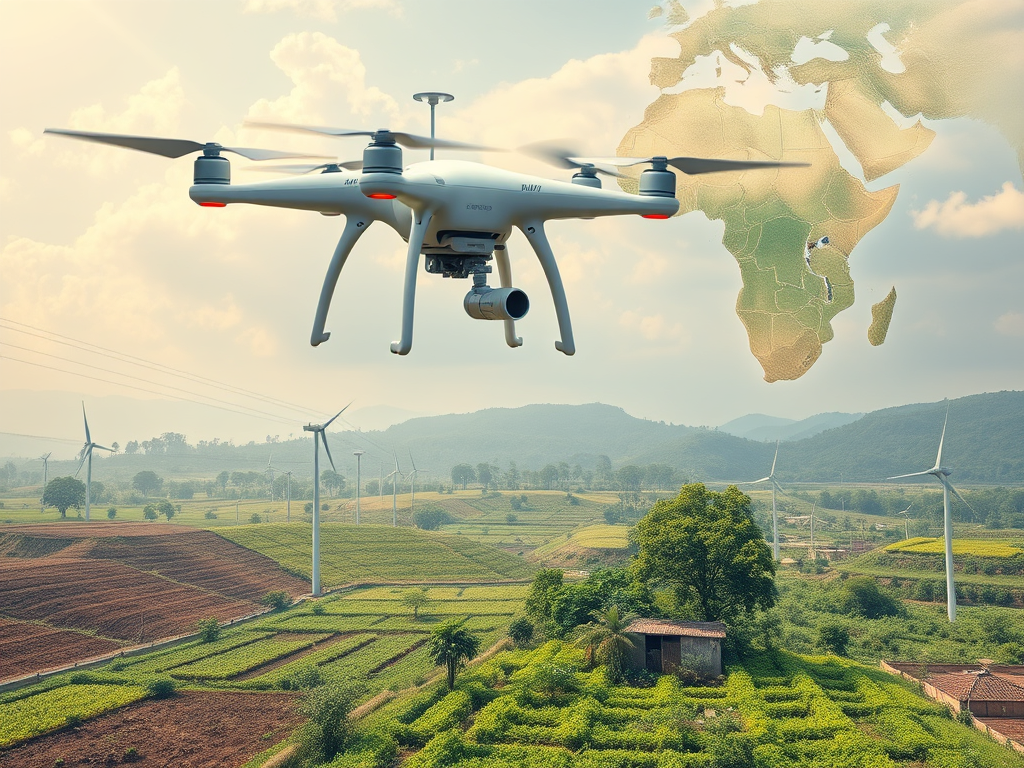
    For example, the South African company, Aerobotics, uses AI and drone technology to provide farmers with detailed insights about their crops. This helps optimize water usage, reduce waste, and increase yield, thus promoting sustainable farming practices.

    Another big environmental concern in Africa is deforestation. Zamba Cloud, a company based in Kenya, uses AI to analyze satellite imagery and detect illegal logging activities in real-time. This allows for quick intervention and helps protect Africa’s forests, which are critical for the continent’s biodiversity and climate regulation.

    Wildlife conservation is another area where AI is making a big impact in Africa. Resolve’s TrailGuard AI, a project in collaboration with Intel, uses AI-powered cameras to detect poachers in national parks in Africa. This AI can differentiate humans from animals, reducing false alarms and allowing park rangers to act swiftly against poaching.

    AI is also being used to optimize energy usage. A company called SHYFT Power Solutions, formally known as Solstice Energy Solution which is based in Nigeria, uses AI to predict energy usage patterns and optimize the performance of solar power systems. This not only helps the transition to cleaner energy but also ensures a consistent power supply in areas with an unreliable grid. SHYFT won MIT Clean Energy Prize in 2017 for bringing an energy-metering program to Nigerian households.

    Salient Predictions, developed by MIT and Woods Hole Oceanographic Institution scientists, has recently secured $2.9M USD grant from Bill and Melinda Gates Foundation to develop AI-powered weather forecasting model for farmers in East Africa.

    Waste management is another area where AI is making a difference in Africa. In Nigeria, the company Wecyclers is using AI to optimize waste collection routes. They are employing machine learning algorithms to analyze data on waste generation and collection, and then determine the most efficient routes for waste collection trucks. This not only reduces fuel consumption and emissions but also ensures that waste is collected more effectively.

    In conclusion, AI is playing a crucial role in addressing environmental issues in Africa. By leveraging AI, companies are finding innovative solutions to predict weather patterns, deforestation, wildlife conservation, and energy optimization. As AI technology continues to evolve, its potential to drive environmental sustainability in Africa will only increase.

    Author: Mohamed Hersi, Licensed Environmental Engineer (P.E.)

  • AI Solutions for Sustainable Water Management

    Water, the source of all life, is facing an unprecedented crisis. The United Nations reports that over 2 billion people live in countries experiencing high water stress, a number projected to grow with climate change. The challenge isn’t just finding more water, it’s about becoming radically more intelligent with the water we have. AI is a vital role in sustainable water management.

    Here’s exactly how AI is turning the tide on global water issues, with real-world applications and numbers that matter.

    1. Xylem: Predicting Leaks Before They Happen

    The Problem: Globally, cities lose an average of 20-30% of their treated water to leaks in aging pipe systems. This “non-revenue water” represents a massive waste of resources and money.

    The AI Solution: Global water technology leader Xylem directly tackles this with its Xylem Vue digital platform. Instead of waiting for a catastrophic pipe burst, Xylem uses AI to create a “digital twin”—a virtual replica of a city’s water network. The AI-powered platform analyzes real-time data from acoustic sensors, pressure monitors, and flow meters embedded within the pipes.

    • How it Works: The algorithms continuously search for tiny anomalies that signal a developing leak. By correlating this data with pipe age, material, and soil conditions, the AI can predict the probability of a pipe failure with over 90% accuracy. This allows utilities to move from costly reactive repairs to proactive, preventative maintenance, saving billions of gallons of water and reducing operational costs by up to 25%.

    2. CropX: Precision Agriculture for More Crop Per Drop

    The Problem: Agriculture is the world’s thirstiest industry, accounting for 70% of all freshwater withdrawals. Traditional irrigation often overwaters or underwaters crops, wasting resources and hurting yields.

    The AI Solution: Agritech innovator CropX provides a powerful AI-driven platform for precision irrigation. The system starts with rugged sensors placed directly in the soil to measure moisture, temperature, and salinity.

    • How it Works: The AI platform synthesizes this ground-level data with satellite imagery and hyperlocal weather forecasts. It doesn’t just tell a farmer if the soil is dry; it generates precise, color-coded maps showing exactly which zones in a field need water and how much. Farmers receive simple, actionable alerts on their smartphones. This targeted approach has been shown to reduce water consumption by up to 40% while simultaneously increasing crop yields, directly addressing both water scarcity and food security.

    3. KETOS: A Smart Lab for Real-Time Water Quality

    The Problem: Ensuring water is safe requires constant testing. Traditionally, this means collecting samples, sending them to a lab, and waiting hours or days for results. This delay leaves communities and industries vulnerable to contamination events.

    The AI Solution: KETOS is changing the game with its autonomous, real-time water quality monitoring solution. The company deploys an intelligent hardware device—essentially a “lab in a field”—that continuously tests water for over 30 parameters, including heavy metals like lead and arsenic, and other contaminants.

    • How it Works: The device feeds data to an AI-powered cloud platform for analysis. The AI establishes a baseline for normal water quality and instantly flags any dangerous deviation, sending alerts directly to operators. This enables immediate intervention, optimizing the use of treatment chemicals and preventing public health crises. It replaces a slow, reactive process with an intelligent, predictive shield.

    4. Google: Forecasting Water Crises at a Global Scale

    The Problem: Climate change is making weather patterns more erratic. Predicting floods and droughts, two sides of the same water management coin, is critical for protecting lives and economies.

    The AI Solution: Google is leveraging its massive computational power and AI expertise for social good. Its Flood Hub platform uses AI and machine learning to create highly accurate riverine flood forecasts.

    • How it Works: The AI models process vast amounts of data, including historical weather events, river level readings, terrain elevation, and satellite imagery. The system can then generate high-resolution forecasts, predicting the time and extent of a flood up to seven days in advance. While focused on floods, the underlying AI-powered hydrological modeling is the same technology that can be adapted to forecast drought severity. Google’s platform is now active in over 80 countries, providing life-saving alerts and demonstrating how AI for good can be deployed at a planetary scale to manage water-related disasters.

    The Future is Fluid and Intelligent

    As we look to 2026 and beyond, AI is an indispensable partner in our quest for water security. Companies like Xylem, CropX, KETOS, and Google prove that this is not a distant dream. The fusion of sustainable technology and data is creating a digital well of solutions, ensuring that every drop is counted, protected, and used to its fullest potential.

    Author: Mohamed Hersi, Licensed Environmental Engineer (P.E.)

  • How AI is Enhancing Coastal Resilience

    A research published in Nature Communications predicts that by the end of the century, as many as 410 million people could face vulnerability due to rising sea levels. Sea level rise pose a threat to coastal communities, ecosystems, and infrastructure worldwide. As the planet warms, glaciers and ice sheets melt, and the volume of the world’s oceans expands due to thermal expansion, leading to higher sea levels. The complexity of predicting and managing the impacts of sea level rise requires innovative solutions, and AI is emerging as a critical tool in this fight against sea level rise, offering innovative solutions and insights to mitigate the impacts.

    AI-Powered Early Warning Systems:

    Companies around the world are leveraging AI to develop sophisticated early warning systems capable of predicting and monitoring sea level rise. For instance, ClimateAI, a San Francisco-based startup, employs machine learning algorithms to analyze vast datasets, including satellite imagery and climate models. By identifying patterns and anomalies, ClimateAI’s systems can provide timely warnings, enabling communities to prepare for and respond to impending threats.

    Infrastructure Resilience:

    AI is also playing a crucial role in enhancing the resilience of coastal infrastructure. Dutch company Royal HaskoningDHV utilizes AI to design and optimize infrastructure projects that can withstand the impacts of rising sea levels. Their AI models take into account various factors, such as tidal patterns, storm surges, and soil conditions, to create robust and sustainable solutions.

    Data-driven Decision-Making:

    Companies like Jupiter Intelligence are utilizing AI to empower decision-makers with accurate and actionable insights. Their platform integrates AI algorithms with climate and environmental data, providing businesses, governments, and communities with the information they need to make informed decisions about land use, development, and resource allocation in the face of sea level rise.

    Collaborative Efforts:

    Addressing sea level rise requires collaborative efforts, and AI is fostering partnerships between governments, businesses, and research institutions. Microsoft, through its AI for Earth initiative, supports projects that utilize AI to tackle environmental challenges. This includes initiatives focused on coastal resilience, monitoring, and conservation, demonstrating the potential of cross-sector collaboration.

    In summary, as sea levels continue to rise, the integration of AI into climate change mitigation efforts becomes increasingly crucial. The innovative solutions provided by companies across the globe showcase the adaptability and potential of AI in addressing complex environmental challenges. By harnessing the power of AI for early warning systems, resilient infrastructure, and data-driven decision-making, we can forge a path towards a more sustainable and resilient future in the face of sea level rise.

    Author: Mohamed Hersi, Licensed Environmental Engineer (P.E.)
  • Revolutionizing Lithium Extraction with AI and Biology

    The San Francisco-based startup, Aether, is revolutionizing the lithium extraction industry by leveraging artificial intelligence (AI), nano-engineering, and biology. The company has raised $49 million in 2023 in Series A round led by Natural Capital and Unless to scale its AI-driven lithium extraction and rare metal mining.

    Aether’s technology utilizes molecular assemblers, a combination of synthetic biology and machine learning, to extract lithium in the most efficient way, including from sources that were previously inaccessible due to low lithium concentrations. These molecular assemblers are introduced to a brine where they bond only to specified metal atoms, regardless of the concentration, and release them into a new solution. This process eliminates the need for extensive infrastructure, replacing it with portable, modular shipping containers for refining and extraction.

    The company’s technology is not only innovative but will also minimize environmental impacts. Current lithium extraction techniques, such as open-pit mining or evaporation ponds, require high lithium concentrations to be commercially viable and also use vast amounts of land and water. In contrast, Aether’s process will use less water than the amounts required in evaporation ponds used in places like South America’s Lithium Triangle.

    Aether’s initial focus is on lithium extraction but according to the company’s CEO, their technology can also help mine rare earth metals and other critical minerals from previously inaccessible reserves.

    In summary, Aether’s use of AI and synthetic biology to extract lithium represents a significant technological advancement in the mining industry. It not only opens up previously inaccessible lithium reserves but also does so in a more environmentally friendly and efficient manner compared to the decades old existing options that have caused environmental issues globally. As the demand for lithium and other rare metals continues to grow, particularly for use in electric vehicle batteries and other high-tech applications, innovations like those being developed by Aether will be increasingly important.

    Author: Mohamed Hersi, Licensed Environmental Engineer (P.E.)

  • Which AI Model is Best at Solving Technical Problems? My 5-Question Accuracy Test

    This experiment evaluated the numerical accuracy of nine different AI models in solving a set of five technical problems. Each question was asked five times, using identical wording, to measure consistency and accuracy. The questions are similar to the type of questions an environmental engineer would be asked when taking the Professional Engineering exam. The models tested were: Astral (independent developer), Claude Sonnet 4 (Anthropic), Grok 3 (xAI), Gemini 2.5 Pro (Google), Gemini 2.5 Flash (Google), Llama 4 Maverick (Meta), GPT-4o (OpenAI), O3 (OpenAI), and O3-Pro (OpenAI).

    Here are the five questions I asked for each model:

    1. A municipal landfill uses a compacted 1.08-m-thick clay liner that has a hydraulic conductivity of 1 × 10⁻⁷ cm/s. If the depth of the leachate above the clay liner is 30 cm and the porosity of the clay is 55%, what is the time (years) required for the leachate to migrate through the liner?
    2. A 40-ft-thick confined aquifer has a piezometric surface 85 ft above the bottom-confining layer. Groundwater is being extracted from a 4-in.-diameter fully penetrating well. The pumping rate is 35 gpm. The aquifer is relatively sandy with a hydraulic conductivity of 175 gpd/ft². Steady-state drawdown of 5 ft is observed in a monitoring well 10 ft from the pumping well. What is the drawdown (ft) in the pumping well?
    3. A radiation monitor reads 100 mR/hr at a distance of 6 ft from the geometric center of a 2-ft diameter drum of radioactive waste. What is the expected dose rate (mR/hr) at the surface of the drum?
    4. A subsurface remedial treatment technology costs $245,000 to construct initially with annual operation and maintenance costs of $9,000 for a 5-year operational life. Using an annual interest rate of 6% and no equipment salvage value, what is the annualized cost for the remedial treatment technology?
    5. The following information applies to the reaction of methane: CH₄ + 2O₂ → CO₂ + 2H₂O.
    SpeciesEnthalpy of Formation (J/mol)
    CH₄-74,980
    O₂0
    CO₂-394,088
    H₂O-242,174

    The total heat of reaction (J/mol) is most nearly:

    Evaluation Method and Result:

    Each model’s numerical answers were compared to the correct values. The result was considered correct if it was within ±1% of the true answer. Accuracy was calculated as the percentage of the 25 total responses (5 questions × 5 trials) that met this criterion.

    RankModelAccuracy (%)
    1Gemini 2.5 Flash80
    2Claude Sonnet 464
    3Gemini 2.5 Pro60
    4o360
    5o3 – Pro40
    6Grok 332
    7Llama 4 Maverick20
    8GPT-4o4
    9Astral0

    Key Findings

    • Gemini 2.5 Flash outperformed all other models, providing correct answers 80% of the time. Its strong performance suggests high numerical precision and consistency despite being optimized for speed.
    • Claude Sonnet 4 and Gemini 2.5 Pro also performed well, demonstrating reliable reasoning capabilities.
    • OpenAI’s O3 models showed mixed results, with the base version outperforming the Pro variant in this test.
    • GPT-4o and Astral were notably less accurate, indicating potential weaknesses in numerical computation for these specific technical problems.

    Conclusion

    This experiment showed that accuracy can vary widely between AI models when tackling engineering and scientific problems. Among the models tested, Gemini 2.5 Flash delivered the most consistent and accurate results, demonstrating that a model built for speed can still excel in technical problem-solving.

    As someone who contributes to AI training in math and engineering, I’m fortunate to have free access to many different AI models — which means I can run experiments like this purely out of curiosity. It’s always interesting to see how each model approaches the same problem, and I look forward to exploring even more challenging scenarios in future tests.

    Author: Mohamed Hersi, Licensed Environmental Engineer (P.E.)