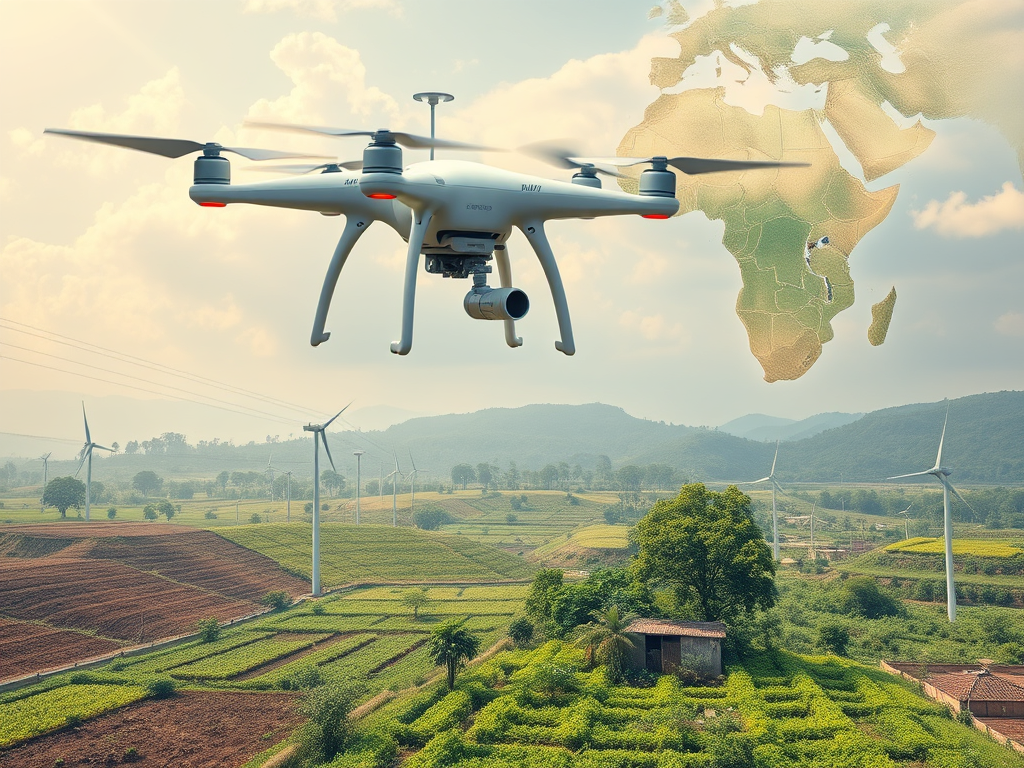
AI is increasingly being recognized as a powerful tool in addressing environmental challenges in Africa. From predicting weather patterns to monitoring wildlife and optimizing energy usage, AI is transforming the way people understand and interact with the environment. One of the most pressing environmental issues in Africa is the changing climate. AI can help mitigate its effects by providing accurate predictions and simulations. Several companies are embarking in this journey already.
For example, the South African company, Aerobotics, uses AI and drone technology to provide farmers with detailed insights about their crops. This helps optimize water usage, reduce waste, and increase yield, thus promoting sustainable farming practices.
Another big environmental concern in Africa is deforestation. Zamba Cloud, a company based in Kenya, uses AI to analyze satellite imagery and detect illegal logging activities in real-time. This allows for quick intervention and helps protect Africa’s forests, which are critical for the continent’s biodiversity and climate regulation.
Wildlife conservation is another area where AI is making a big impact in Africa. Resolve’s TrailGuard AI, a project in collaboration with Intel, uses AI-powered cameras to detect poachers in national parks in Africa. This AI can differentiate humans from animals, reducing false alarms and allowing park rangers to act swiftly against poaching.
AI is also being used to optimize energy usage. A company called SHYFT Power Solutions, formally known as Solstice Energy Solution which is based in Nigeria, uses AI to predict energy usage patterns and optimize the performance of solar power systems. This not only helps the transition to cleaner energy but also ensures a consistent power supply in areas with an unreliable grid. SHYFT won MIT Clean Energy Prize in 2017 for bringing an energy-metering program to Nigerian households.
Salient Predictions, developed by MIT and Woods Hole Oceanographic Institution scientists, has recently secured $2.9M USD grant from Bill and Melinda Gates Foundation to develop AI-powered weather forecasting model for farmers in East Africa.
Waste management is another area where AI is making a difference in Africa. In Nigeria, the company Wecyclers is using AI to optimize waste collection routes. They are employing machine learning algorithms to analyze data on waste generation and collection, and then determine the most efficient routes for waste collection trucks. This not only reduces fuel consumption and emissions but also ensures that waste is collected more effectively.
In conclusion, AI is playing a crucial role in addressing environmental issues in Africa. By leveraging AI, companies are finding innovative solutions to predict weather patterns, deforestation, wildlife conservation, and energy optimization. As AI technology continues to evolve, its potential to drive environmental sustainability in Africa will only increase.
Author: Mohamed Hersi, Licensed Environmental Engineer (P.E.)


Leave a comment