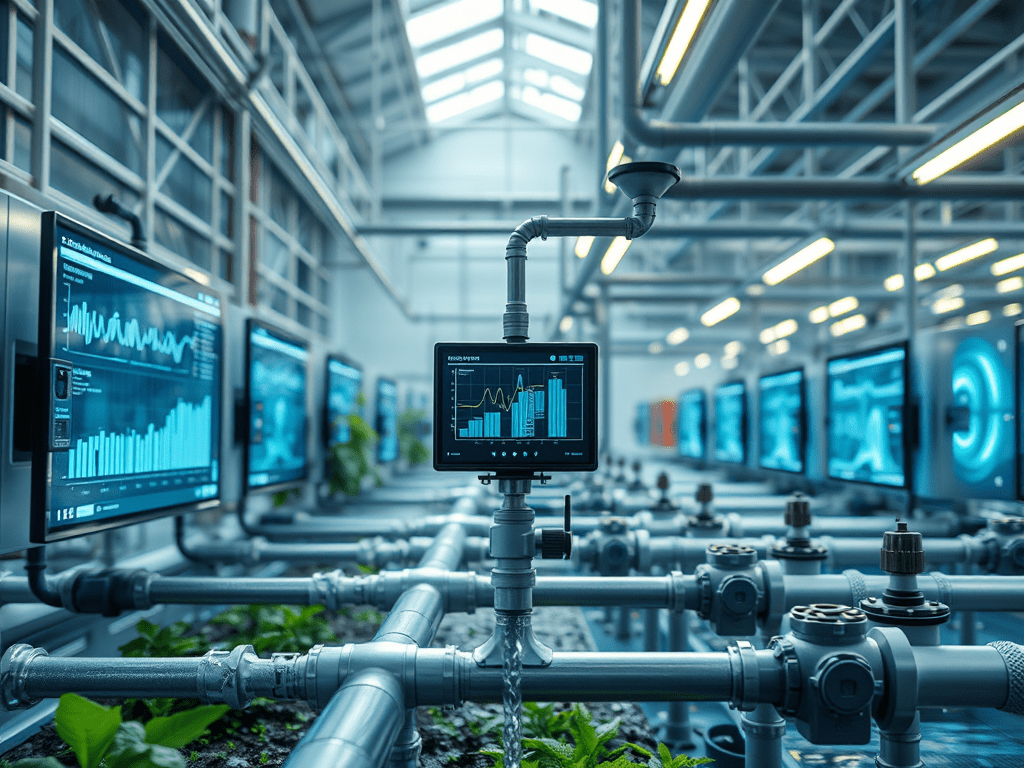
Water, the source of all life, is facing an unprecedented crisis. The United Nations reports that over 2 billion people live in countries experiencing high water stress, a number projected to grow with climate change. The challenge isn’t just finding more water, it’s about becoming radically more intelligent with the water we have. AI is a vital role in sustainable water management.
Here’s exactly how AI is turning the tide on global water issues, with real-world applications and numbers that matter.
1. Xylem: Predicting Leaks Before They Happen
The Problem: Globally, cities lose an average of 20-30% of their treated water to leaks in aging pipe systems. This “non-revenue water” represents a massive waste of resources and money.
The AI Solution: Global water technology leader Xylem directly tackles this with its Xylem Vue digital platform. Instead of waiting for a catastrophic pipe burst, Xylem uses AI to create a “digital twin”—a virtual replica of a city’s water network. The AI-powered platform analyzes real-time data from acoustic sensors, pressure monitors, and flow meters embedded within the pipes.
- How it Works: The algorithms continuously search for tiny anomalies that signal a developing leak. By correlating this data with pipe age, material, and soil conditions, the AI can predict the probability of a pipe failure with over 90% accuracy. This allows utilities to move from costly reactive repairs to proactive, preventative maintenance, saving billions of gallons of water and reducing operational costs by up to 25%.
2. CropX: Precision Agriculture for More Crop Per Drop
The Problem: Agriculture is the world’s thirstiest industry, accounting for 70% of all freshwater withdrawals. Traditional irrigation often overwaters or underwaters crops, wasting resources and hurting yields.
The AI Solution: Agritech innovator CropX provides a powerful AI-driven platform for precision irrigation. The system starts with rugged sensors placed directly in the soil to measure moisture, temperature, and salinity.
- How it Works: The AI platform synthesizes this ground-level data with satellite imagery and hyperlocal weather forecasts. It doesn’t just tell a farmer if the soil is dry; it generates precise, color-coded maps showing exactly which zones in a field need water and how much. Farmers receive simple, actionable alerts on their smartphones. This targeted approach has been shown to reduce water consumption by up to 40% while simultaneously increasing crop yields, directly addressing both water scarcity and food security.
3. KETOS: A Smart Lab for Real-Time Water Quality
The Problem: Ensuring water is safe requires constant testing. Traditionally, this means collecting samples, sending them to a lab, and waiting hours or days for results. This delay leaves communities and industries vulnerable to contamination events.
The AI Solution: KETOS is changing the game with its autonomous, real-time water quality monitoring solution. The company deploys an intelligent hardware device—essentially a “lab in a field”—that continuously tests water for over 30 parameters, including heavy metals like lead and arsenic, and other contaminants.
- How it Works: The device feeds data to an AI-powered cloud platform for analysis. The AI establishes a baseline for normal water quality and instantly flags any dangerous deviation, sending alerts directly to operators. This enables immediate intervention, optimizing the use of treatment chemicals and preventing public health crises. It replaces a slow, reactive process with an intelligent, predictive shield.
4. Google: Forecasting Water Crises at a Global Scale
The Problem: Climate change is making weather patterns more erratic. Predicting floods and droughts, two sides of the same water management coin, is critical for protecting lives and economies.
The AI Solution: Google is leveraging its massive computational power and AI expertise for social good. Its Flood Hub platform uses AI and machine learning to create highly accurate riverine flood forecasts.
- How it Works: The AI models process vast amounts of data, including historical weather events, river level readings, terrain elevation, and satellite imagery. The system can then generate high-resolution forecasts, predicting the time and extent of a flood up to seven days in advance. While focused on floods, the underlying AI-powered hydrological modeling is the same technology that can be adapted to forecast drought severity. Google’s platform is now active in over 80 countries, providing life-saving alerts and demonstrating how AI for good can be deployed at a planetary scale to manage water-related disasters.
The Future is Fluid and Intelligent
As we look to 2026 and beyond, AI is an indispensable partner in our quest for water security. Companies like Xylem, CropX, KETOS, and Google prove that this is not a distant dream. The fusion of sustainable technology and data is creating a digital well of solutions, ensuring that every drop is counted, protected, and used to its fullest potential.
Author: Mohamed Hersi, Licensed Environmental Engineer (P.E.)


Leave a reply to AI Solutions for Sustainable Water Management – THE CATALYST Cancel reply